
Research Projects
Wrongful Convictions: Frank Sterling
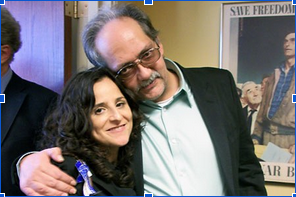
On April 28, 2010, Frank Sterling was exonerated after spending nearly two decades of incarceration for the 1988 murder of Viola Manville. Sterling developed a seizure disorder and while incarcerated and subsequently died prematurely of a heart attack after his exoneration. His experience demonstrates the slow violence, the gradual and often invisible harm perpetuated by institutions that wear down a person’s physical and emotional health, as well as prospects for the future, perpetuated by the criminal legal system. Using court records and Sterling’s letters to his attorney, Amanpreet Kaur and Laura Warren Hill look beyond the legal impacts of wrongful convictions to explore their lasting psychological, physical and social costs of wrongful convictions. Amanpreet Kaur and Laura Warren Hill, “The Slow Violence of Wrongful Convictions: Frank Sterling and the Human Cost of the Carceral State” in American Violence: Histories, Structures, and Legacies, eds. Scott Gac and Caroline E. Light (Routledge, forthcoming 2026).

ARISE Event Security
The ARISE Event Security Project examines the innovative approach to event safety developed by ARISE Event Services, exploring whether elements of its model can be applied more broadly to public safety and community care. Using historical research on the evolution of event security and comparative analyses of traditional event safety models, the project investigates what distinguishes ARISE’s community-centered approach from more traditional models. By studying how ARISE Event Services addresses safety and security, the project contributes to ongoing conversations about alternative public safety models and evidence-based approaches to creating safer communities.
New York State Juvenile Detention Centers
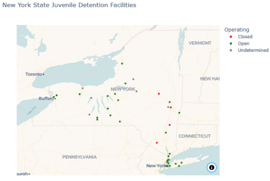
The Juvenile Detention system in New York state is decentralized, with each facility being operated by various public (state, county, city) or private entities. Due to this structure, there is currently no comprehensive list of all Juvenile Detention Facilities in the state. Since the start of the project, more than fifty-five facilities have been identified and mapped. This project will continue identifying Juvenile Detention Facilities in New York regardless of operating status while compiling documents on maltreatment. The goal of the project is to increase transparency of the state juvenile justice system and identify child institutional maltreatment occurrences in each facility.

The Troop C Scandal: An Untold Story of Police Corruption
Researchers illustrate the long-term impacts of the New York State Police Troop C evidence-fabrication scandal, analyzing how a lack of accountability and consistent police discipline led to wrongful convictions, expensive payouts for taxpayers and poor community-police relations.
Photo: Shirley Kinge was wrongfully convicted after New York State Police from Troop C planted fingerprint evidence to convict her.
Recovering the Legacy of a Black Woman Political Prisoner: Geraldine (Robinson) Pointer
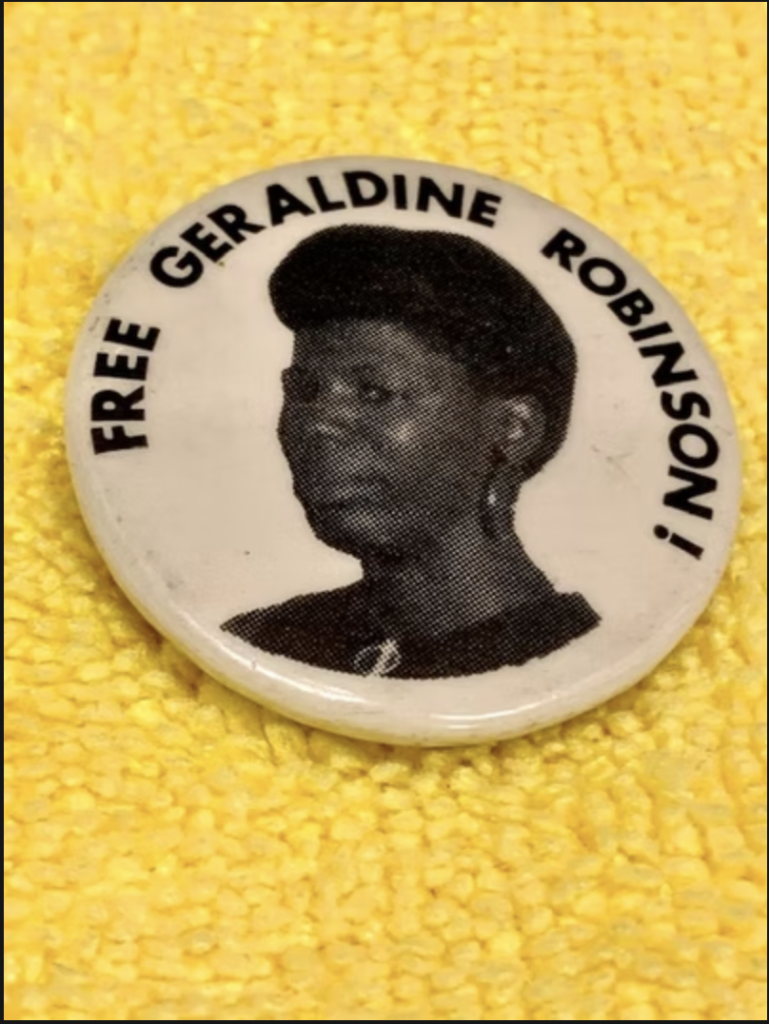
Researchers recover the life of a Black woman political prisoner, Geraldine (Robinson) Pointer, who, along with Black revolutionary Martin Sostre, was wrongfully imprisoned for their involvement in the Black Power movement in Buffalo, New York, in the late 1960s. Their research complements the grassroots organizing of the Justice for Geraldine Pointer and Martin Sostre campaign and the digital public engagement work of the #BuffaloSyllabus. To learn more about Geraldine Pointer, check out one of our researchers’ most recent pieces in Hammer and Hope.
Photo Credit: Martin Sostre Institute.
Innocence Narratives
Innocence Narratives, a genre coined by Carissa Bayack, are autobiographical accounts in which wrongfully convicted individuals reclaim their stories, challenge state-produced narratives of guilt, affirm innocence, and advocate for justice and criminal legal reform. Emerging alongside the Innocence Movement, these works transform personal testimony into a powerful form of resistance against systemic injustice.
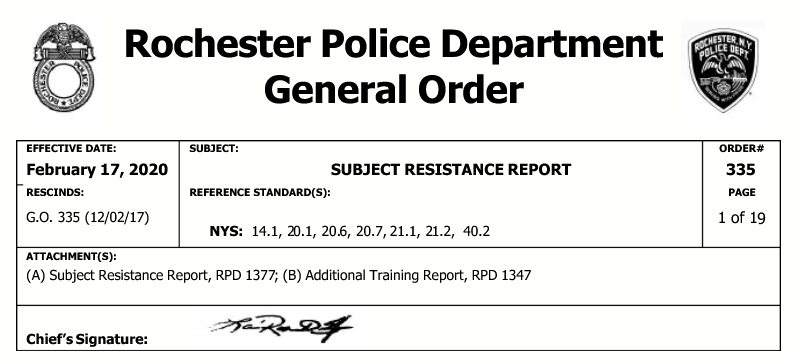
Rochester Police Department Subject Resistance Report Data
Researchers compare Subject Resistance Reports (SRRs) with body worn camera footage from Rochester, NY.
AI software identifies racialized information found in SRRs.
FOIL/FOIA
Researchers create a guide to effective FOIL/FOIA inquiries about policing in New York State. They request police misconduct records from municipalities across Upstate New York State for longitudinal and comparative studies.
See Ted Forsyth’s “FOIL and Find Out” for more information about getting started with the FOIL process.
HOPE First Roc
The first non-police crisis response team funded as a pilot program of Daniel’s Law, HOPE First Roc remembers the people killed by police while experiencing a mental health crisis.
This work is done in memory of Daniel Prude.

Restorative Histories – Broome
In partnership with JUST, researchers collaborate with incarcerated and formerly incarcerated people to develop archives of their personal papers.
These will be housed in the UNY-PRC Digital Archive.
This project is funded by the Steven Ross Fund at Binghamton University.